




Snapchat review
 Analysis by GetAllApps
Some conversations are better when they feel like a moment rather than a permanent record. Snapchat is built around that idea: it gives people a communication app for sharing photos, videos, and messages in a more casual, immediate way. I find its appeal easiest to understand when I think about the full routine: capture something, send it to the right people, see how they respond, and then move on with the day.
From a moment to a message
Snapchat comes from Snap Inc and has been around since October 29, 2012. It is free to download, rated for teens, and has grown into a widely used way to communicate. Its store summary, “Share the moment!”, gets the basic mood right: the app is less about composing a polished statement and more about passing along something happening now.
That approach makes the starting point feel straightforward. When I open a communication app, I usually have a reason in mind: I want to show a friend what I’m seeing, send a quick reaction, or keep a conversation moving. Snapchat is designed to make those everyday exchanges feel informal. A photo or short video can carry the context that would otherwise take several lines of explanation, while a message can keep the exchange going afterward.
That doesn’t mean every interaction has to be a picture. The broader value is having a place where visual sharing and conversation sit together. I can begin with something I’ve captured, add a thought, and hand the moment over to someone else. That combination is what makes Snapchat feel different from a basic text-only messenger: the visual part is not just an extra attachment but a central way to communicate.
Capture, choose, send
The practical flow starts with deciding what is worth sharing. Maybe it is a funny detail, a small update, or something that makes more sense when a friend can see it. From there, I can turn that moment into a photo or video and choose how to pass it along. The important part is that the app encourages a quick, conversational rhythm instead of asking every post to feel like a finished publication.
That rhythm works well for people who like to communicate in fragments. A quick visual can say “look at this” without requiring a carefully worded introduction. If the recipient has a response, the exchange can continue as a conversation rather than ending with a one-way upload. I appreciate that sense of continuity: the content starts the interaction, but the people on the other side give it meaning.
There is also a useful difference between sharing with a specific person and putting something in front of a broader audience. Those choices serve different moods. A direct exchange feels personal and low-key; a wider share can feel more like narrating what is happening. Thinking about the audience before sending is a small step, but it helps the app fit different social situations without making every update feel the same.
Keeping a conversation moving
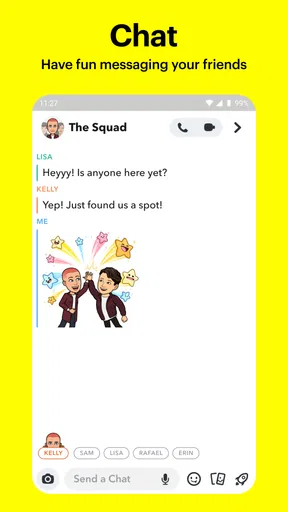
Once a snap reaches someone, the handoff matters. The sender has passed along a moment, and the recipient decides whether to react, reply, or send something back. That back-and-forth is where Snapchat feels most like a communication tool rather than a camera with a sharing button. I can picture a conversation unfolding through a mix of visuals and messages, with each person contributing a small piece instead of trying to tell the whole story at once.
This style suits friends who already enjoy casual, frequent contact. It lowers the pressure to make every message profound or perfectly phrased. A quick reaction can be enough to acknowledge a moment, while a more involved response can turn it into a longer chat. In my view, that flexibility is one of the app’s strongest qualities: the same basic interaction can stay brief or grow into a real conversation.
It also changes the feeling of sharing. In a traditional post, people may spend time choosing wording and considering how it will look to a large group. Snapchat’s conversational emphasis can make a small update feel more like speaking to someone than publishing for an audience. That distinction is appealing if you want communication to feel spontaneous, though it depends on having people in your circle who use the app in a similar way.
From one person to a group
The next handoff is deciding who should receive the moment. A private exchange and a group conversation are not interchangeable: one is aimed at a particular person, while the other can bring several friends into the same shared context. The choice affects how a message lands. A joke that works between two people may need a little explanation in a group, while a shared event can become more fun when everyone can contribute.
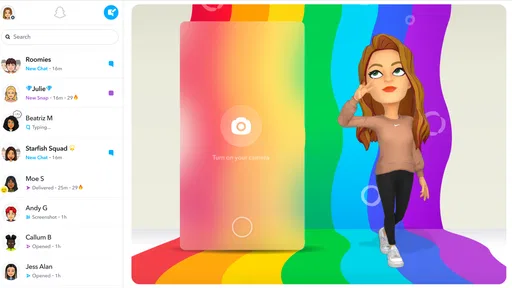
I like that the app’s overall communication style leaves room for both kinds of interaction. It can be used for a small check-in or for keeping a circle of friends connected around something happening in common. The workflow remains recognizable: make or choose something to share, decide who should see it, send it, and respond to what comes back. That simple pattern is easy to understand even if a new user needs time to get comfortable with the app’s particular habits.
There is a social handoff, too. When someone sends a moment, they are inviting another person into their perspective. The recipient might answer with a message, respond visually, or carry the topic elsewhere. That makes Snapchat feel lively when both sides participate. If only one person is sending updates and nobody replies, the same flow can feel one-sided. The app can support communication, but it cannot create mutual interest on its own.
What the experience delivers
At its best, Snapchat makes everyday communication feel immediate and personal. It is especially appealing when a photo or video can express something more naturally than a long text. I can share a small slice of my day, let a friend see the context, and continue the conversation without turning the moment into a formal post. For users who enjoy that style, the app can become a familiar part of staying in touch.
The scale of its audience helps explain why it is so recognizable. Snapchat has more than 1 billion installs, an average rating of 4.2, and around 40 million ratings. Those figures suggest that it has become a major option in social communication, but popularity is not the same as a perfect fit for everyone. The experience still depends on whether the people you want to talk to are active there and whether you enjoy visual, quick exchanges.
Its large community also means that people may encounter different ways of using the app. Some may treat it as a place for direct conversations, while others may focus more on sharing updates. That variety can be a strength because it gives the app more than one social role. It can also make the first few sessions feel busy if you arrive expecting a plain messaging tool. I would approach it as a visual communication space and learn its rhythm through the people I actually want to contact.
Where the flow can stumble
The main friction is not complicated technology; it is social coordination. A communication app works best when your friends use it too. If your usual contacts prefer another messenger, Snapchat may become an extra stop rather than the natural place to talk. The capture-and-send routine can be quick, but a smooth workflow still depends on the recipient being ready to respond in the same environment.
Another possible snag is choosing the right audience. Spontaneity is part of the appeal, yet a fast-moving exchange leaves less room to reconsider who will see a moment. I recommend pausing briefly before sending anything personal or sensitive and checking that the recipient or audience matches your intention. That is sensible for any social app, especially one centered on sharing in the moment. A little care at the handoff can prevent an otherwise easy interaction from becoming uncomfortable.
The app may also feel less rewarding if you prefer communication that is quiet, structured, or entirely text-based. Snapchat’s visual emphasis is a genuine part of its identity, not a detail everyone has to enjoy. Some people want a simple chat window that stays out of the way; others like the feeling of sending a picture as part of an ongoing conversation. If you fall into the first group, the experience may take more adjustment than it does for someone who already likes communicating through photos and videos.
There are optional in-app purchases, with listed amounts ranging from 49 cents to $399.99 per item. Snapchat is still free to download, so the basic decision is whether its communication style suits you. I would treat purchases as separate from the core question: does this make it easier or more enjoyable to stay in touch with the people who matter to you? Keeping that distinction clear helps the app’s social features remain the focus.
A natural fit for visual conversations
Snapchat is a strong choice if you want an app where photos, videos, and messages can work together in casual exchanges. Its flow is easy to summarize: start with a moment, choose who should receive it, send it, and let the response guide what happens next. The handoffs between sender, recipient, and group are what turn a single image into a conversation. When everyone is engaged, that loop feels quick and personal.
The best reason to use Snapchat is the way it makes small moments easy to share and respond to. It is not automatically the right communication app for every friend group, and its visual-first personality will not appeal to everyone. But if your people are there and you enjoy spontaneous exchanges, it can make staying connected feel less like composing a formal update and more like letting someone join you for a moment.
Overall, I see Snapchat as a mature, popular communication app with a clear point of view. It works best when you use it with people who enjoy the same quick, visual rhythm and when you choose your audience thoughtfully. If that matches how you already like to talk, Snapchat is easy to understand and worth considering as a regular way to share the day as it happens.
Pros and cons
Pros
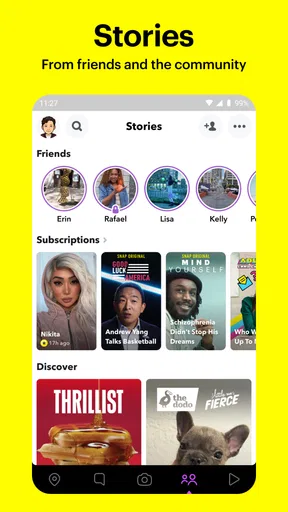
- Stories make it easy to share moments with friends.
- Snap Map helps users see where friends choose to share their location.
- Chat messages can disappear after viewing.
- Creative lenses offer plenty of options for photos and videos.
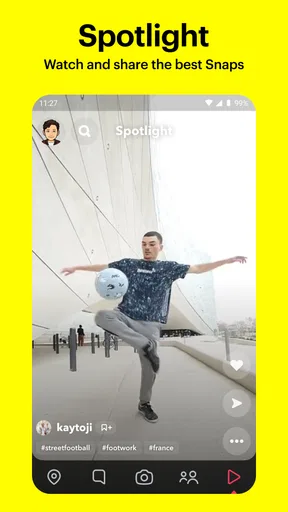
- Spotlight provides a feed of short videos from other creators.
Cons
- Some features can feel confusing for new users.
- Location sharing may raise privacy concerns.
- Many filters and lenses require an internet connection.
- Frequent notifications can become distracting.
- Some content includes ads and sponsored posts.


